


A groundbreaking interactive tool unveiling ICE detention data reveals that 71% of immigrants currently detained have no criminal record, directly contradicting claims that enforcement efforts primarily target dangerous criminals. The new ICE detention map, launched at the Hackers on Planet Earth conference, exposes a stark reality about America’s immigration detention system.
Interactive Tool Exposes Immigration Detention Reality
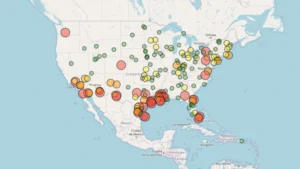
The ICE detention map, accessible at watchice.org, was developed by privacy organization Lockdown Systems to visualize immigration data that ICE is legally required to publish every two weeks. Jennifer Helsby, the engineer and researcher who built the tool, presented the findings that challenge President Trump’s assertions that “murderers, human traffickers, gang members, and other criminals” are the primary focus of mass-deportation policies.
According to the latest data analysis, 46,113 individuals are currently detained by ICE, with the overwhelming majority having no criminal convictions whatsoever. This represents a significant shift in the composition of detention facilities across the United States.
Criminal History Breakdown Reveals Minimal Threats
Recent analysis confirms the pattern revealed by the detention map. As of June 29, 57,861 people were detained by ICE, with 41,495 of them—representing 71.7%—having no criminal convictions. This includes 14,318 people with pending criminal charges and 27,177 who are subject to immigration enforcement but have no known criminal convictions or pending charges.
For those detainees who do have criminal records, the offenses are predominantly minor. Traffic violations represent the most common type of conviction among detained immigrants. According to UCLA Professor Graeme Blair, Deputy Director of the Deportation Data Project, 53% of convictions fall into three main categories: immigration, traffic, or nonviolent vice crimes.
Dramatic Shift in Detention Priorities Under Current Administration
The data reveals a substantial change in ICE’s detention practices since the current administration took office. Private prison corporations are positioned to benefit significantly from this expanded detention system, as the number of people in ICE custody has grown from 40,500 in January to over 60,000 by June.
The increase becomes even more pronounced when examining the threat level classifications assigned by ICE. Each detainee receives a threat level rating from 1 to 3, with level 1 being the highest threat. However, 84% of people detained at 201 facilities nationwide were not assigned any threat level, indicating they pose no identified security risk.
Quota System Drives Arrest Numbers Higher
A significant factor contributing to these numbers emerged when White House Deputy Chief of Staff Stephen Miller implemented a daily arrest quota of 3,000 people, up from the previous 650 arrests per day during the first five months of Trump’s second term. This policy change resulted in ICE arresting nearly 30% more people in May than in April, with another 28% increase in June.
The Cato Institute’s analysis shows that between February 8 and May 17, the daily average of “noncriminals” processed into the system ranged from 421 to 454. Following the quota implementation, that number rose to 678 and then jumped to 927 in early June.
Legal Requirements and Data Transparency
Five years ago, Congress mandated that ICE begin publishing detailed statistics on its detainees every two weeks. This requirement has enabled researchers and advocacy organizations to track patterns in immigration enforcement and detention. The data, available in downloadable spreadsheets on ICE’s “Detention Management” page, provides comprehensive information about facility locations, detention lengths, and detainee backgrounds.
Immigration Enforcement vs. Public Safety Claims
Immigration experts argue that current enforcement patterns contradict public safety justifications often cited for detention policies. Lauren-Brooke Eisen, senior director of the justice program at the Brennan Center for Justice, stated that “President Trump has justified this immigration agenda in part by making false claims that migrants are driving violent crime in the United States, and that’s just simply not true.
The data supports this assessment, showing that only 6.9% of detained immigrants with any criminal history had committed violent crimes. Most detainees are asylum seekers who arrived at the border requesting protection, with many having already passed initial credible fear screenings.
Congressional lawmakers recently approved ICE’s largest budget allocation in history, providing $45 billion specifically for constructing immigration facilities. This funding increase aligns with the administration’s expanded detention capacity needs as arrest numbers continue rising.
For further reporting on immigration policy, visit BrandonBent.com. Additional detention statistics and trends can be found through the Transactional Records Access Clearinghouse (TRAC) and independent analysis from the Cato Institute.
Sources
- https://san.com/cc/interactive-ice-detention-map-shows-71-of-detainees-have-no-criminal-record/
- https://tracreports.org/immigration/quickfacts/
- https://www.cato.org/blog/65-people-taken-ice-had-no-convictions-93-no-violent-convictions
- https://fortune.com/2025/07/12/ice-raids-trump-immigration-crackdown-deportation-no-criminal-convictions/
- https://www.ctvnews.ca/world/article/most-ice-detainees-have-no-criminal-history-afp-analysis/