
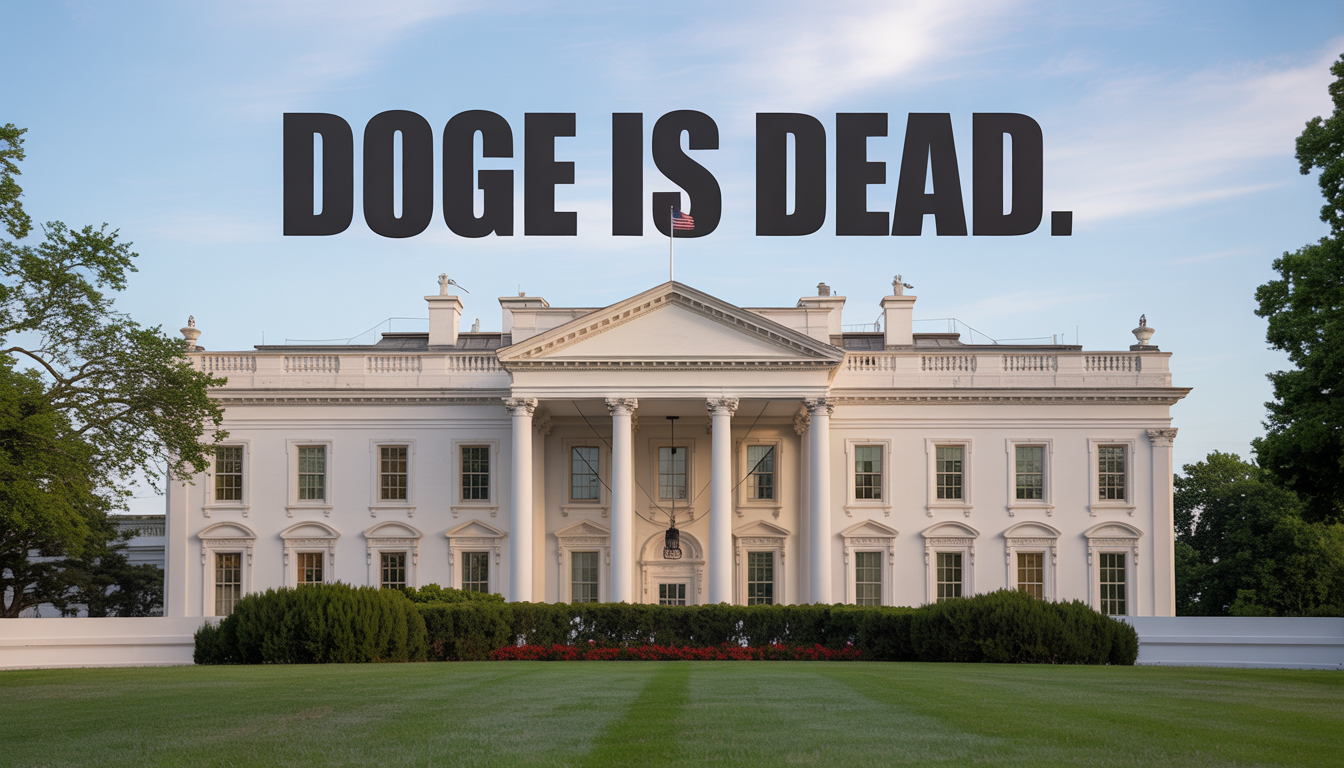

Donald Trump’s Department of Government Efficiency, widely known as DOGE, has officially been disbanded despite having months left on its original charter. The move marks a quiet end to one of the administration’s most publicized initiatives, originally designed to cut bureaucracy and streamline government operations. In its early days, DOGE was promoted as a revolutionary force for trimming waste, but as time progressed, its activities became increasingly difficult to track. Today, DOGE exists only in name, its responsibilities absorbed by other agencies across Washington. For more insights into ongoing reforms, visit brandonbent.com.
How DOGE Started and What It Promised
Created with significant fanfare, DOGE was positioned as a cornerstone of Trump’s broader strategy to reduce spending and shrink the size of government. Elon Musk was announced as its inaugural leader, tasked with guiding the department toward bold regulatory cuts and sweeping efficiency gains. At a notable CPAC appearance, Musk even brandished a chainsaw—an image that went viral—to symbolize his intentions to “cut through bureaucracy.” Despite dramatic visuals and confident promises, the department failed to provide transparent metrics or independently verified evidence of the billions in savings it claimed.
DOGE’s Impact and the Transition to Other Agencies
Much of DOGE’s early work revolved around hiring freezes and internal restructuring efforts. However, as months went on, its visibility diminished. The Office of Personnel Management (OPM) gradually took over many of DOGE’s core responsibilities, with OPM Director Scott Kupor confirming that DOGE’s once-central role had evaporated. Even the government-wide hiring freeze—one of DOGE’s most public policies—was quietly lifted without the dramatic announcements that characterized the department’s launch.
The Future of Government Reform After DOGE
Although DOGE itself has been dissolved, fragments of its mission have reappeared in new initiatives. Several prominent DOGE alumni have joined the National Design Studio, a Trump-backed program dedicated to modernizing federal websites and improving public-facing digital tools. Joe Gebbia, known for co-founding Airbnb and later advising DOGE, now heads this design studio. Projects reportedly include the overhaul of law enforcement recruitment pages and digital campaigns targeting drug price transparency.
Additionally, other former DOGE leaders have assumed key roles in areas such as healthcare oversight, foreign assistance strategy, and defense-related operations. These moves suggest that while DOGE is gone, its personnel and ideas continue to influence policy indirectly. Regulatory cuts are also still underway, now supported by emerging AI-driven systems managed by former DOGE affiliates. For a deeper look at evolving regulatory strategies, explore updates at this external analysis.
DOGE’s Legacy: Ambition, Controversy, and Unanswered Questions
DOGE leaves behind an uneven legacy. Its earliest months were marked by high-energy messaging, aggressive targets, and bold promises from Trump and Musk alike. Yet the lack of detailed public reporting, combined with the department’s increasingly fragmented structure, made assessing its true impact challenging. By the time DOGE was formally absorbed into other agencies, many questions remained: How much money was truly saved? Were regulatory cuts as effective as claimed? Why was the department dissolved before completing its mandate?
As the administration shifts focus toward AI-based reforms and digital modernization, the dissolution of DOGE marks the end of an era. While DOGE itself may no longer function as a centralized unit, its imprint is visible across ongoing efforts to reshape federal infrastructures. Whether this legacy is ultimately viewed as innovative or ineffective will depend on how future reforms build upon the groundwork DOGE laid down.
Sources


1 comment
Reading this, I’m struck by how much of DOGE’s story seems to hinge on perception versus measurable outcomes — big promises, big personalities, and then a pretty quiet fade-out. As you’ve followed this, do you get the sense that the lack of transparency and hard data was by design (to keep things flexible and PR-driven), or more a symptom of a chaotic, improvisational approach to governing that just couldn’t support real accountability?