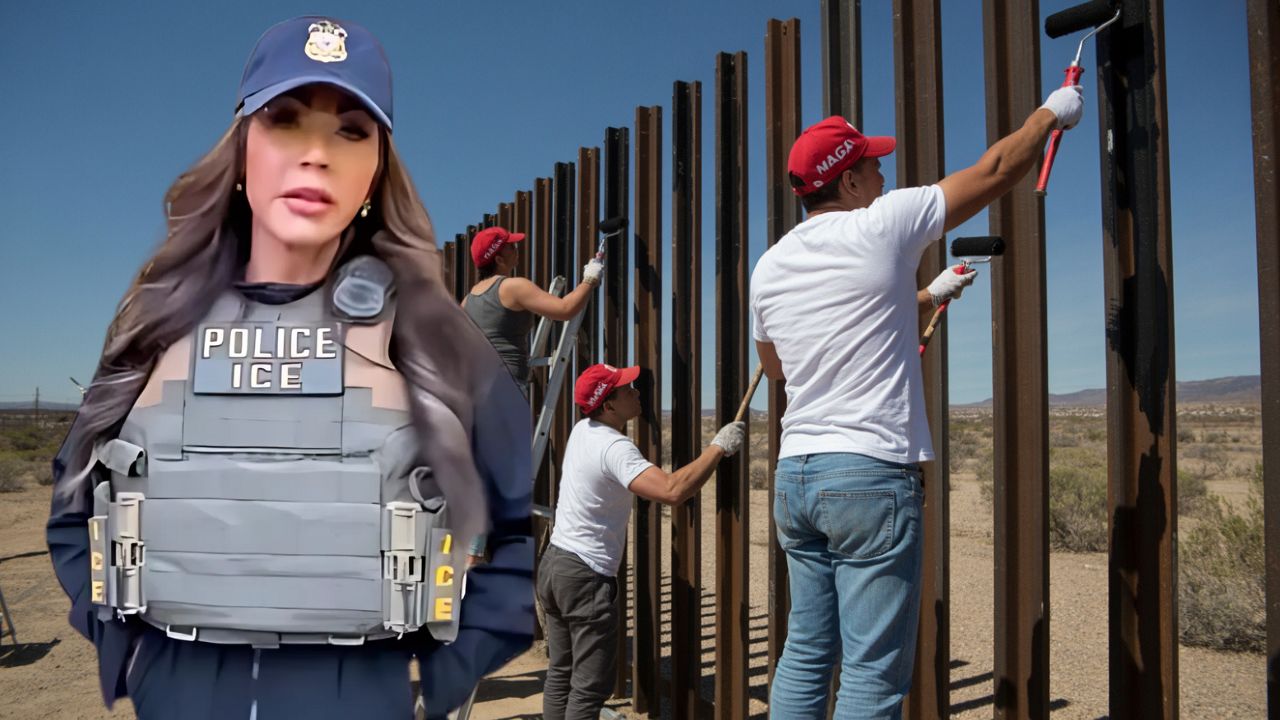

US border wall black paint has resurfaced as a major government initiative aimed at making the barrier hotter and harder to climb, but with a significant cost attached. The border wall, which stretches approximately 452 miles of new or replacement barrier with about 670 miles of total fenced or walled areas, will require a costly paint job to meet the new directive.
According to estimates from 2020, painting the wall black could add around $500 million in costs to the existing border wall project. The commonly proposed method involves applying two coats of black acrylic paint to the steel bollards that make up much of the structure. Private contractors had projected costs around $1.2 million per mile for this two-coat acrylic paint application, which would bring the total cost roughly in line with the half-billion-dollar figure for the entire stretch planned.
There are, however, more expensive paint options on the table. Military-grade epoxy coatings, known as System 21, could cost about $4.5 million per mile due to their durability and resistance to abrasion, rust, and welding damage. An even pricier alternative is black powder coating, regularly used on cars and appliances for its sleek finish, estimated at $6.8 million per mile. These premium coatings would significantly increase total project costs if selected.
Labor and Technical Challenges
Labor costs are a major factor in the painting expenses. In some instances, military personnel reduced costs substantially—for example, in California, a section was painted for about $1 million per mile by using military labor. However, private contractors typically would charge the higher $1.2 million per mile figure due to labor and material costs combined. Painting also presents logistical challenges, especially near the Mexico border where restricted access might require specialized equipment to safely and effectively coat the walls from the U.S. side.
US Border Wall Black Paint: Why Use It?
The rationale behind US border wall black paint hinges on thermal deterrence. Black surfaces absorb more heat, making the steel structures extremely hot to the touch under the southern sun, thereby discouraging individuals from climbing over. Department of Homeland Security Secretary Kristi Noem reiterated that the black color will increase the wall’s temperature during hot weather, making it “too hot to touch,” alongside its design of height and depth that already makes climbing or tunneling difficult.
Additionally, the black paint can help with rust prevention, extending the lifespan of the metal bollards. The concept of painting the wall black has been discussed since the Trump administration, which pushed both for the construction of the wall and the idea of enhancing its deterrence capabilities with color changes.
How the Price Per Mile Adds Up
Calculating the price per mile involves materials, labor, equipment, site prep, lane closures, staging areas, and safety protocols. The steel bollard design requires specialized surface prep (cleaning, blasting, priming), followed by a coatings system that adheres to corrosion and UV-resistance specs. Limited access along the border—especially where terrain is rugged or access from the Mexican side is restricted—can require extended boom lifts, mobile scaffolding, or rope access, all of which inflate costs and timelines. While standard commercial painting might be quoted at $1.50–$4.00 per square foot, specialized industrial coatings and field conditions push effective rates far higher.
US Border Wall Black Paint Costs and Funding
While the 2020 estimates provide a strong baseline, there are no officially updated cost figures released beyond the roughly $500 million mark. However, Congress recently approved about $46.5 billion in funding toward border wall efforts broadly, which includes construction and maintenance activities. How much of that will be specifically allocated for US border wall black paint remains unclear.
This cost estimate is important to consider because the price per mile includes multiple components: labor, materials, equipment, and operational complexities. For example, access limitations at certain border stretches mean painters may have to use specialized boom lifts or even paint from the U.S. side using extended equipment to avoid crossing into Mexican territory. These factors can drive costs up beyond initial projections.
For context, standard painting costs for exterior concrete or typical walls usually range from $1.50 to $4 per square foot, but the steel bollard-style border wall requires specialized coatings and application methods that are more expensive and labor-intensive.
In summary, US border wall black paint is a large-scale project whose primary goal is to make the barrier a more effective physical and psychological deterrent by increasing its heat absorbency. The price tag, estimated at or above $500 million with acrylic paint, may increase substantially with higher-grade coatings and labor challenges. This expenditure includes not only paint and labor but also the complexity of working along a difficult and sensitive international border.
For deeper context and ongoing coverage of border policy and infrastructure, see BrandonBent.com. For additional reporting on this subject, visit The Texas Tribune.
Key Takeaways
- Acrylic systems are the baseline cost; premium coatings (epoxy or powder) escalate per‑mile pricing.
- Logistics—terrain, access limits, safety—can push effective rates well above initial estimates.
- US border wall black paint is intended as a thermal deterrent and corrosion control measure.
Sources
- https://www.texastribune.org/2020/05/06/trump-border-wall-paint-it-black/
- https://cbs58.com/news/southern-border-wall-will-be-painted-black-to-deter-people-from-climbing-it-during-hot-weather-dhs-secretary-says
- https://english.elpais.com/usa/2025-08-20/us-to-paint-southern-border-wall-black-to-make-it-hotter-and-harder-to-climb.html
- https://nypost.com/2025/08/19/us-news/southern-border-wall-will-be-painted-black-to-make-it-even-harder-for-people-to-climb-dhs-secretary-kristi-noem-says/
- https://www.usatoday.com/story/news/politics/2025/08/20/dhs-border-fence-black-paint-immigration/85740715007/
- https://www.foxnews.com/politics/kristi-noem-reveals-striking-new-layer-trumps-border-wall-strategy
- https://www.washingtonpost.com/immigration/trump-border-wall-black-paint/2020/05/06/dbda8ae4-8eff-11ea-8df0-ee33c3f5b0d6_story.html
- https://www.congress.gov/crs-product/R47979
- https://www.reddit.com/r/texas/comments/1mvbzl4/theyre_painting_the_border_wall_black_because_it/
- https://www.yahoo.com/news/articles/dhs-secretary-says-entire-southern-002106684.html
- https://www.usatoday.com/story/news/politics/2020/05/07/donald-trump-wants-border-wall-painted-black-report/5181469002/
- https://abc7.com/post/dhs-secretary-kristi-noem-says-entire-southern-border-wall-painted-black-stop-people-climbing/17594918/
- https://www.ainvest.com/news/trump-border-wall-black-paint-directive-fiscal-quagmire-strategic-investment-2508/
- https://www.bloomberg.com/news/articles/2025-08-19/trump-wants-to-paint-border-wall-black-so-it-s-too-hot-to-touch