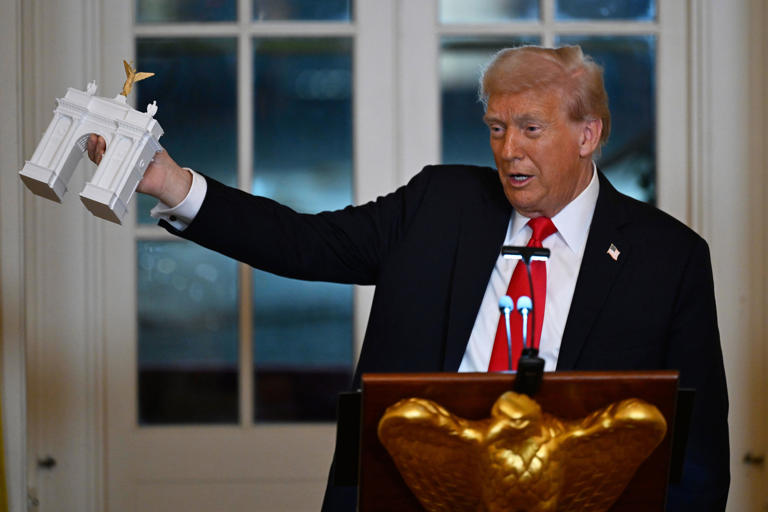


Former President Donald Trump has ignited a firestorm of criticism after making controversial comments about how American museums portray slavery, claiming that these institutions make the historical practice appear “worse than it was.” The remarks, made during a recent interview, have drawn swift condemnation from historians, civil rights leaders, and museum professionals across the nation.
Trump’s statements came during a discussion about American history education, where he suggested that museums and historical sites have deliberately exaggerated the horrors of slavery to promote what he termed a “woke agenda.” These comments have reignited debates about historical accuracy, institutional racism, and the ongoing culture wars surrounding how America’s past is taught and remembered.
Historical Context and Immediate Backlash
The former president’s remarks specifically targeted several prominent museums, including the National Museum of African American History and Culture in Washington, D.C. Trump argued that these institutions present an overly negative portrayal of slavery that fails to acknowledge what he described as “positive aspects” of the period. However, historians and museum curators have unanimously rejected these characterizations as historically inaccurate and deeply offensive.
Dr. Sarah Williams, a professor of American History at Georgetown University, responded to Trump’s comments by stating, “There is no such thing as making slavery look worse than it was. The institution of slavery was a crime against humanity that involved the systematic brutalization, dehumanization, and exploitation of millions of African Americans.”
The NAACP issued a statement calling Trump’s remarks “dangerous historical revisionism” that attempts to whitewash one of America’s darkest chapters. Civil rights organizations have pointed out that such statements contribute to ongoing efforts to minimize the lasting impact of slavery on American society.
Museum Response and Educational Mission
Major museums across the country have defended their educational mission and commitment to historical accuracy. The Smithsonian Institution released a comprehensive statement reaffirming its dedication to presenting factual, evidence-based exhibitions about slavery and its aftermath. Museum officials emphasized that their displays are based on extensive historical research, primary source documents, and archaeological evidence.
“Our responsibility is to tell the truth about American history, including its most difficult chapters,” said Dr. Kevin Young, director of the National Museum of African American History and Culture. “We present slavery as it actually was – a brutal system that denied basic human dignity to millions of people and shaped the trajectory of our nation in profound ways.”
Educational experts have noted that modern museum exhibits about slavery are more comprehensive and nuanced than previous generations of displays, which often minimized or ignored the experiences of enslaved people. Contemporary exhibitions incorporate personal narratives, family histories, and cultural traditions alongside documentation of the violence and oppression inherent in the slavery system. For example, the Library of Congress Born in Slavery collection provides firsthand accounts.
Political Implications and Broader Context
Trump’s comments about slavery museums come amid ongoing political battles over history education in schools and public institutions. Several states have passed legislation restricting how topics like slavery, segregation, and systemic racism can be discussed in classrooms, often citing concerns about making students feel guilty about their race or heritage.
These educational debates have extended to museum spaces, with some conservative activists calling for changes to exhibitions they view as overly critical of American history. However, professional historians and museum associations have consistently opposed such efforts, arguing that they represent attempts at censorship rather than legitimate scholarly debate.
The controversy also highlights broader tensions within the Republican Party about how to address issues of race and historical memory. While some GOP leaders have distanced themselves from Trump’s specific comments about slavery, others have echoed his concerns about what they perceive as liberal bias in cultural institutions.
Expert Analysis and Historical Consensus
Leading historians have emphasized that there is overwhelming scholarly consensus about the nature and impact of American slavery. The historical record, including slave narratives, plantation records, and government documents, provides extensive evidence of the brutality and inhumanity of the system.
“The idea that slavery could be portrayed as ‘worse than it was’ fundamentally misunderstands both the historical evidence and the purpose of historical education,” explained Dr. Michael Rodriguez, author of several books on American slavery. “Museums have a responsibility to educate the public about historical realities, not to sanitize them for political comfort.”
Archaeological evidence from former slave quarters, medical records documenting the treatment of enslaved people, and thousands of first-person accounts all support the portrayal of slavery presented in modern museums. These sources consistently reveal a system characterized by violence, family separation, sexual exploitation, and systematic dehumanization.
Moving Forward: Education and Historical Memory
The controversy surrounding Trump’s remarks has prompted renewed discussions about the importance of accurate historical education and the role of museums in preserving collective memory. Museum professionals have reaffirmed their commitment to evidence-based exhibitions while acknowledging the challenges of presenting difficult historical topics to diverse audiences.
Educational advocates have stressed that understanding the full scope of American slavery is essential for comprehending contemporary issues like racial inequality, economic disparities, and ongoing social tensions. They argue that attempts to minimize or misrepresent this history ultimately harm efforts to build a more just and equitable society.
As this controversy continues to unfold, it serves as a reminder of the ongoing struggles over historical memory and the vital importance of protecting institutions dedicated to preserving and sharing accurate historical knowledge.
Sources
- National Museum of African American History and Culture
- NAACP Official Statements
- Library of Congress: Born in Slavery Collection
- Smithsonian Institution
- Brandon Bent