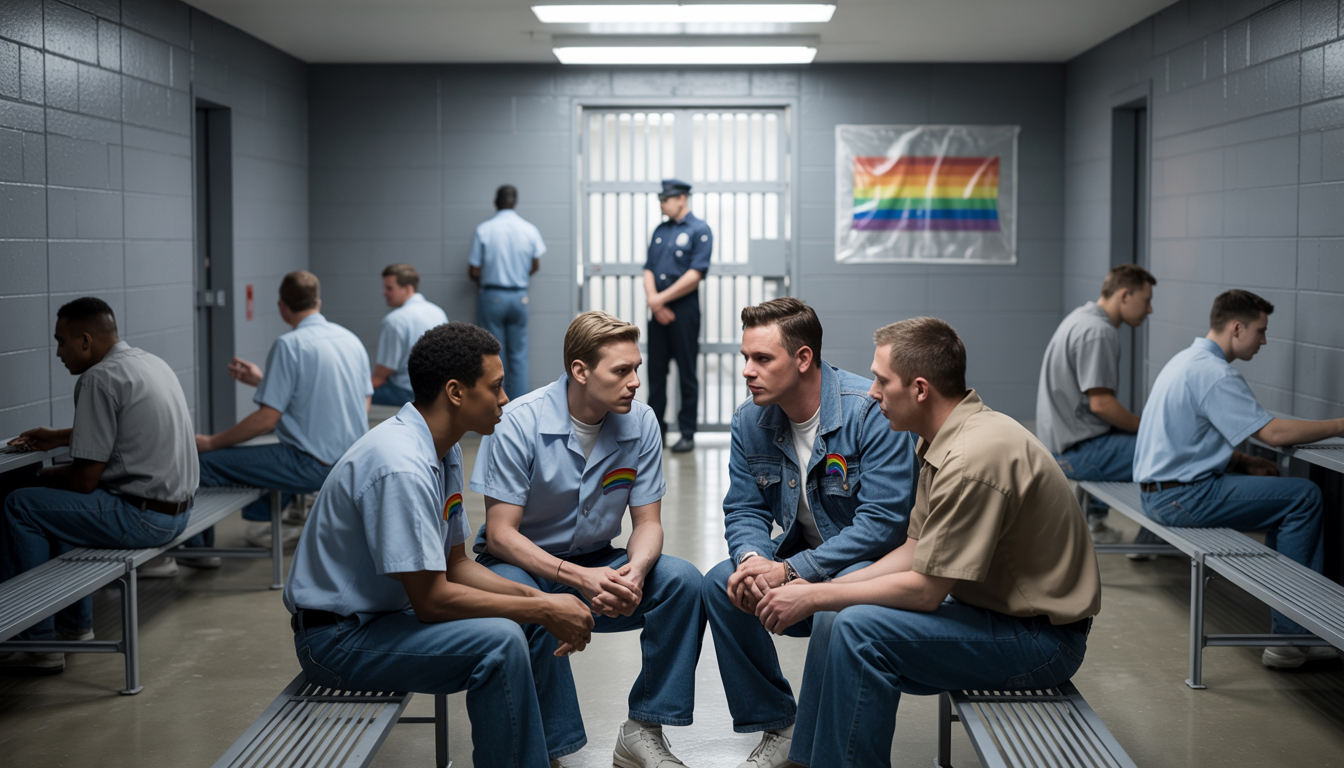
In a dramatic escalation of the Trump administration’s ongoing rollback of LGBTQ rights, the Department of Justice has quietly issued an internal memo directing prison inspectors to halt enforcement of federal safety standards designed to protect transgender and other LGBTQ inmates from sexual assault, retaliation, and discriminatory treatment.
The memo — dated November 29, 2025, and first revealed by NPR — orders all PREA (Prison Rape Elimination Act) auditors to stop evaluating compliance with transgender-specific protections, including housing decisions, search procedures, shower privacy, staff training, and protocols that treat anti-LGBTQ violence as a PREA violation. The directive, signed by Acting Deputy Assistant Attorney General Tammie M. Gregg, aligns federal inspections with President Donald Trump’s long-stated view that gender is “biological,” not self-identified.
For LGBTQ advocates, corrections experts, and civil rights attorneys, the memo represents an alarming dismantling of standards that have saved lives for a decade. Transgender inmates—especially trans women housed in men’s facilities—have long suffered the nation’s highest rates of sexual violence behind bars. Federal surveys consistently show that trans inmates are assaulted at least six times more often than the general prison population.
“This memo doesn’t just weaken protections — it erases them,” said one senior advocate at Just Detention International. “It signals to prisons across the country that LGBTQ people don’t deserve safety.”
A Historic Undoing of PREA’s Most Critical LGBTQ Safeguards
PREA, passed with bipartisan support in 2003, set national standards intended to prevent rape and sexual abuse in prisons, jails, and juvenile detention centers. In 2015, after years of data, testimony, and litigation, the DOJ implemented formal rules recognizing that transgender people are uniquely vulnerable within correctional systems.
The new Trump-era memo instructs auditors to disregard these standards entirely.
Among the protections now effectively suspended:
1. Case-by-Case Housing Decisions
PREA required prisons to consider an inmate’s gender identity, personal safety concerns, and history of victimization. Inspectors are now told to ignore any violations, even if facilities automatically place trans women in men’s prisons.
2. Search Protocols
Under PREA, staff could not conduct cross-gender strip searches except in emergencies, and genital exams had to be trauma-informed. The memo removes enforcement, allowing wardens and officers to revert to older, often abusive practices.
3. Private and Protected Shower Access
For trans and intersex inmates regularly targeted in shared spaces, PREA mandated separate or privacy-ensured showers. Auditors may no longer cite facilities that abandon this rule.
4. LGBTQ-Specific Staff Training
PREA required officers to receive training on gender identity, respectful communication, and understanding the vulnerabilities of LGBTQ populations. These requirements are now unenforced.
5. Proper Classification of Anti-LGBTQ Violence
Attacks or harassment motivated by transphobia were coded as PREA violations requiring investigation. The memo eliminates this standard from audits entirely.
Advocates warn this will lead to a surge in violence, particularly against Black and Brown trans women, who already face disproportionate incarceration and assault rates.
A Pattern of Hostility Toward Transgender People in Federal Custody
The PREA rollback fits into a broader transformation of prison policy under President Trump’s second term.
Since resuming office in January 2025, the administration has:
Ended gender-affirming healthcare in federal prisons, including hormones and surgeries previously approved under medical necessity standards.
Transferred trans women into men’s facilities based solely on “biological sex,” reversing Obama-era and Biden-era policies.
Implemented new restrictions on name changes, gender markers, and pronoun recognition.
Backed legislative efforts allowing states to restrict or eliminate LGBTQ-specific protections for incarcerated people.
According to reporting by NPR and The New York Times, the sudden shift has destabilized prisons nationwide, leading to lawsuits, protests, and a rise in reported assaults.
“This isn’t about safety. It’s about scoring points in a culture war,” said a former Bureau of Prisons official. “Professionals spent years building PREA systems that reduced rape and violence. The Trump DOJ is tearing them down in months.”
Legal and Human Rights Fallout: ‘State-Sanctioned Vulnerability’
Civil rights groups including Lambda Legal, the ACLU, and the National Center for Transgender Equality are preparing challenges, arguing that the memo violates congressional intent and undermines PREA’s statutory requirements.
The 19th News reports that the policy also endangers intersex people, who historically faced involuntary surgeries or coerced “sex determination” exams — practices PREA helped curb.
Juvenile facilities may be hardest hit: trans youth face five times the assault risk of their cisgender peers, according to federal data. Without PREA audits, advocates fear widespread abuse will go unreported and unpunished.
“This is state-sanctioned vulnerability,” said Linda McFarlane of Just Detention International. “By eliminating oversight, the DOJ has effectively told wardens they won’t be held accountable.”
Nationwide Implications for Every State and Facility
Because PREA applies to any correctional institution receiving federal funding, the DOJ memo ripples across all 50 states — from major state prisons to rural jails and halfway houses.
Already, conservative governors in Texas, Florida, and Tennessee have signaled they may align their state-level audits with Trump’s federal guidance, further eroding protections.
PREA’s data-driven benefits add urgency to the backlash: facilities with full compliance saw 35% fewer sexual assaults overall, not just among LGBTQ inmates. Removing these safeguards, experts warn, risks destabilizing already strained systems.
Political Response: Anger, Fear, and a Fight Ahead
Democratic lawmakers denounced the memo as unlawful and dangerous, but with Republican control of Congress, oversight may stall. Several senators have demanded hearings, but committee chairs have not agreed to schedule them.
Advocates stress that public pressure is crucial.
“This is a human rights emergency,” said one ACLU attorney. “We need voters, families of incarcerated people, and allies to speak out. Lives are at stake.”
For the tens of thousands of LGBTQ people currently incarcerated in the United States, many feel the federal government has abandoned them.
“They’re invisible to the public,” said a former PREA auditor. “But they’re the ones who will pay the price first.”
Conclusion: A Dangerous Turning Point for Prison Safety
The Trump DOJ’s suspension of LGBTQ safety standards marks one of the most consequential reversals in federal prison policy in decades. What began as a bipartisan effort to eliminate rape behind bars has now become entangled in political ideology, leaving the most vulnerable incarcerated people at greater risk.
Until Congress intervenes — or a future administration reverses course — transgender and LGBTQ inmates remain exposed, unheard, and unprotected.
“PREA was a promise,” one advocate said. “Today, that promise was broken.”
Sources
- NPR – DOJ Halts LGBTQ Prison Safety Audits
- 19th News – PREA Protections for Trans & Intersex People
- Independent – Trump DOJ Ends PREA Enforcement
- Yahoo News – DOJ Suspends Prison Rape Protections