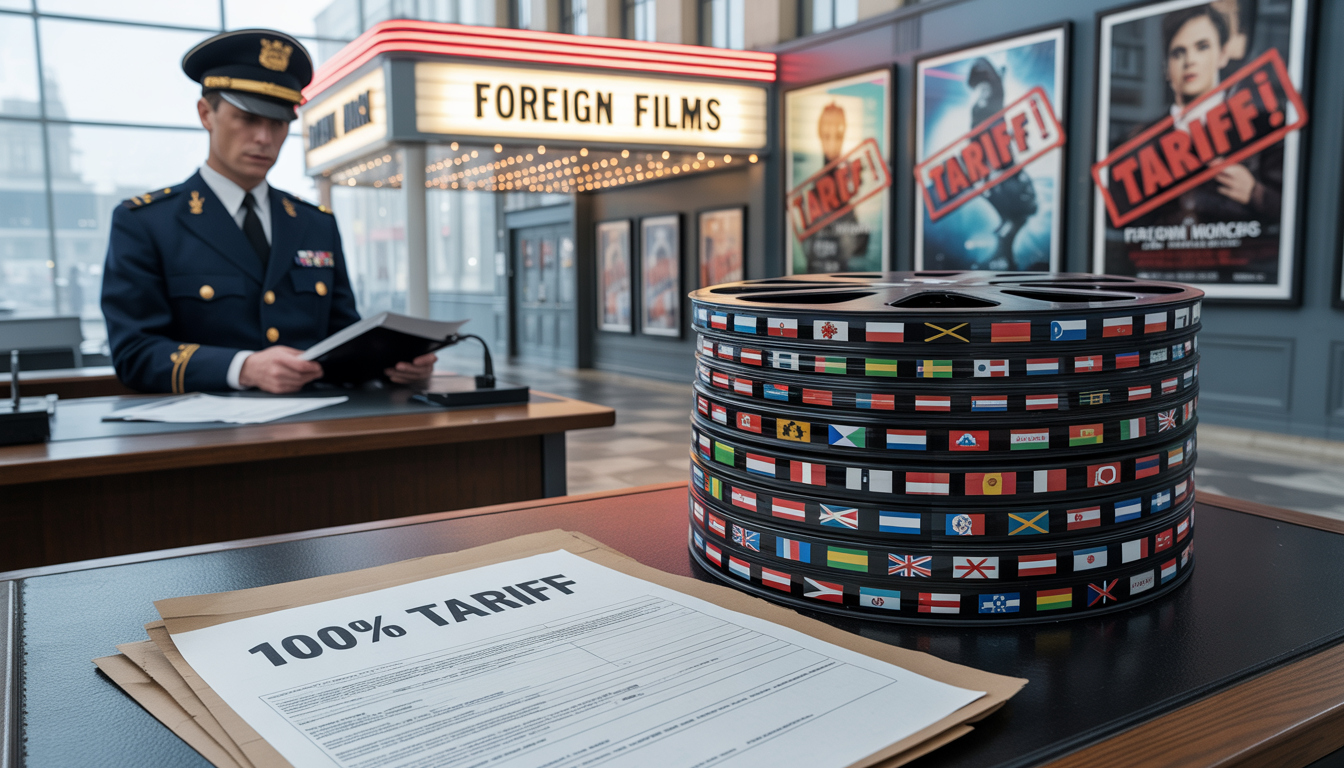

In a controversial move that has already sparked global debate, former President Donald Trump announced the implementation of a 100% tariff on all films made outside the United States. This Trump 100% tariff foreign films policy, designed to protect domestic studios and encourage more American-made productions, could reshape the entertainment industry by altering how foreign films enter the U.S. market and how audiences access international cinema.
Trump’s Push for Film Tariffs
This policy mirrors Trump’s long-standing “America First” economic strategy, now specifically targeting Hollywood and the global film economy. By doubling the cost of importing foreign films, the Trump 100% tariff foreign films strategy aims to boost U.S.-based studios while discouraging American distributors from purchasing rights to international movies.
Supporters argue that these new tariffs could strengthen employment opportunities in the film industry and prevent foreign cinema from competing with U.S. blockbusters. Critics, however, fear the move will limit cultural exchange, escalate trade tensions, and harm independent theaters that often rely on international film festivals and foreign-made productions.
Effects on Hollywood and Independent Theaters
Hollywood’s major studios may initially benefit as competition from overseas distributors declines, making it easier for American films to dominate domestic screens. However, independent theaters and niche streaming services face significant challenges. These platforms often rely on foreign content, such as critically acclaimed European dramas, Asian cinema, and Latin American films, to attract loyal audiences.
Without access to affordable international films, smaller theaters may struggle to stay afloat. Festivals like Cannes, Venice, and Toronto, which often debut award-winning non-American titles, could see a sharp decline in U.S. distributors attending. For additional insight into U.S. media and culture, visit BrandonBent.com.
Global Response to the Tariff
The international reaction has been swift. European, Asian, and Latin American filmmakers expressed outrage, calling the Trump 100% tariff foreign films initiative cultural censorship hidden under economic protectionism. Trade groups in Europe have hinted at retaliatory measures, potentially increasing tariffs on U.S. content that dominates global box offices.
China, one of the largest overseas markets for Hollywood, may entertain reciprocal tariffs of its own, which could spark a trade war in the entertainment sector. Cultural groups warn that American audiences will lose exposure to diverse global perspectives, narrowing the range of art and storytelling accessible within the U.S.
Cultural and Economic Impact
While the tariff could generate short-term revenue, experts worry about long-term damage. American audiences may see fewer award-winning international films, reducing the U.S. presence in global film diplomacy. This move also risks isolating American cinema from meaningful cross-cultural exchange, potentially weakening Hollywood’s own influence abroad.
Some critics also point to the rise of streaming giants like Netflix and Amazon, which depend on international production to fuel content demands. A 100% tariff could restrict their ability to license popular foreign shows and movies, reducing variety for subscribers.
What Comes Next for U.S. Film Policy?
The Trump administration has touted the tariff as an economic win for American media workers, but entertainment law experts predict a raft of lawsuits challenging its legality under trade agreements and First Amendment protections.
Meanwhile, moviegoers may face increased ticket prices for foreign films or see them pulled from screens altogether. With Academy Award races often spotlighting international films, the cultural impact could be significant.
For more context on how tariffs have historically affected global industries, you can read a related article here: Example Analysis. For global reactions to Trump’s trade policies in other industries, see this report from The Guardian.
Sources