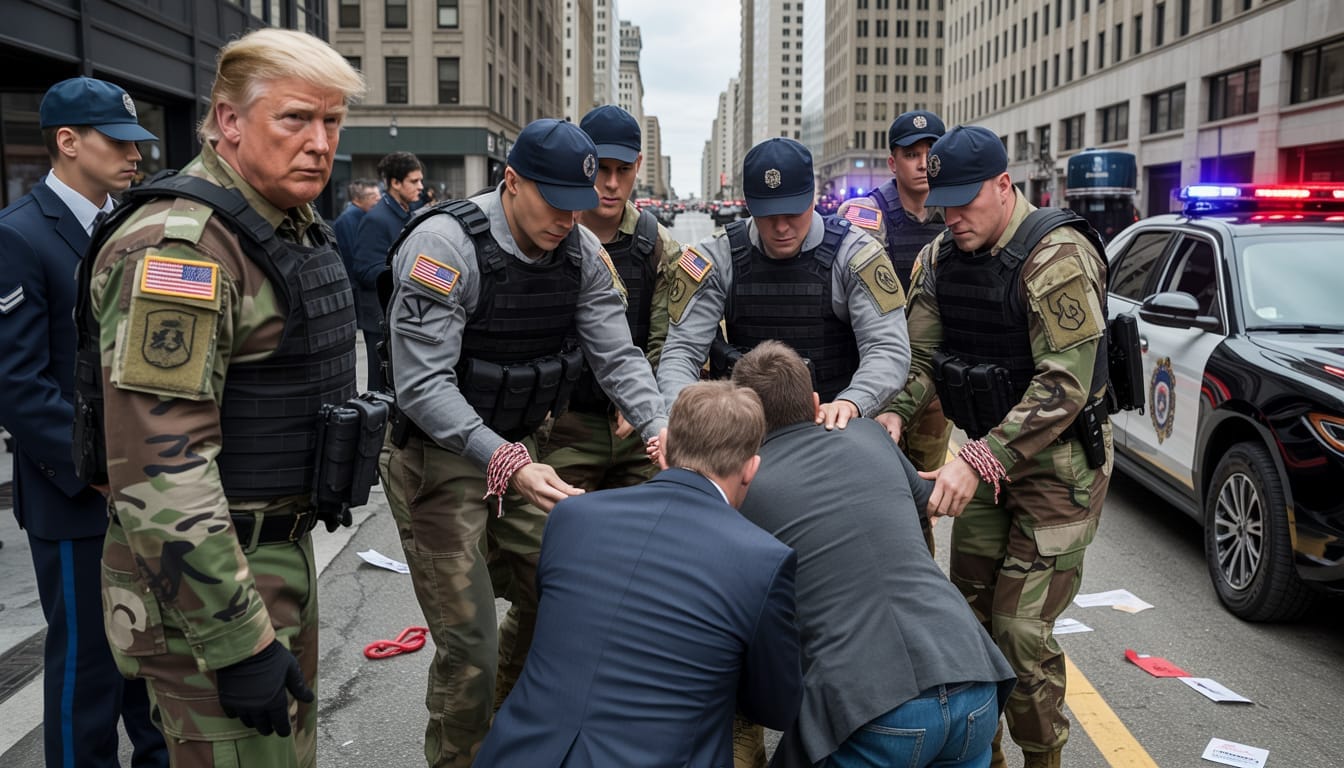
The Trump administration is advancing a controversial plan to establish a military “reaction force” aimed at rapidly responding to civil unrest in American cities. This initiative, officially described as a “Domestic Civil Disturbance Quick Reaction Force,” would involve hundreds of National Guard troops stationed strategically to deploy within an hour to quell protests, riots, or other disturbances threatening public order.
## What Is the Military Reaction Force Plan?
According to internal Pentagon documents, the plan envisions two groups of National Guard troops—300 stationed in Alabama and 300 in Arizona—prepared to quickly mobilize in response to unrest anywhere in the United States. The troops would carry weapons, riot gear, and rotate every 90 days to limit fatigue. The units would be equipped to deploy swiftly, with an initial wave of 100 soldiers able to respond within 60 minutes, followed by additional forces as needed.
The plan uses Title 32 authority, meaning the Guard units remain under state governor command but receive federal funding, granting them limited law enforcement powers during deployment. This approach differs from traditional National Guard responses, which typically occur within individual states. Instead, this force could be moved across state lines to hotspots, providing a more centralized rapid-response capability.
## Context and Implications of Trump’s Plan
This proposal arises amid increased military deployments to domestic locations by the Trump administration. Earlier in 2025, Trump sent 4,000 California National Guard troops and 700 Marines to Los Angeles to support immigration enforcement efforts and 800 troops to Washington, D.C., amid claimed rising crime rates, despite declining violent crime statistics in the capital.
The reaction force concept was partly tested during 2020 following nationwide protests after George Floyd’s death, when some National Guard rapid-response teams were stationed in Arizona and Alabama on alert. However, the current plan would institutionalize this capability, with an estimated cost reaching hundreds of millions annually if military aircraft and crews are kept on standby.
Critics warn this plan raises serious legal and constitutional questions, including concerns over civil-military balance in domestic law enforcement and potential overreach under the Posse Comitatus Act, which restricts active-duty troops’ participation in domestic law enforcement. Maryland Governor Wes Moore described the idea as blatant and dangerously circumventing established procedures for requesting out-of-state National Guard support.
Pentagon officials have declined detailed comment, emphasizing the department’s routine contingency planning. Still, the proposal signals an unprecedented expansion of military involvement in domestic affairs under Trump’s leadership, fueling debates about governance, civil liberties, and the militarization of American public safety.
## Background on Military Deployments and Political Context
Trump’s use of military and National Guard forces on U.S. soil has been a polarizing hallmark of his approach to law and order. His deployment choices, including federalizing the Washington, D.C. police and dispatching troops to the southern border to deter illegal immigration, reflect a broader strategy to project strength amid urban unrest and border security challenges.
Senior military leaders and former Pentagon officials have previously expressed alarm over Trump’s readiness to use military assets domestically, with fears that such moves could erode democratic norms and potentially serve authoritarian ends.
As the Pentagon prepares to submit this reaction force plan for approval, the nation watches closely how it balances security needs against civil rights protections and the historic limits on military roles in domestic governance.
An internal debate persists: Will this military reaction force restore order in volatile situations, or will it escalate tensions and undermine democratic principles? The Trump administration appears determined to move forward, marking a significant development in the U.S. approach to domestic instability.
***
Sources:
– https://www.washingtonpost.com
– https://www.upi.com
– https://www.thehill.com
– https://www.foxnews.com
– https://edition.cnn.com