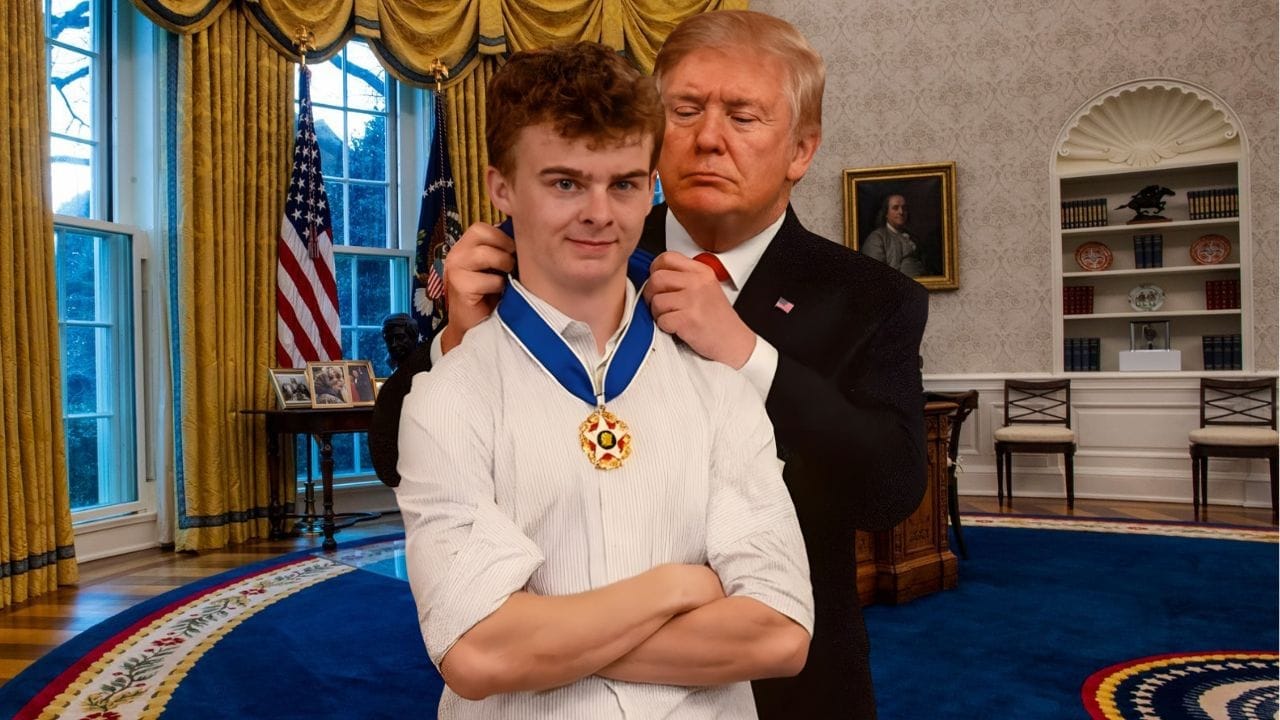

Edward Coristine, better known by his online nickname Big Balls, a former employee at DOGE, is being discussed for the prestigious Presidential Medal of Freedom following a violent late-night carjacking attack in Washington, D.C. The idea surfaced after a MAGA commentator raised the question at a White House press briefing, instantly triggering debate about whether Big Balls merits such an honor and how politics shapes public recognition.
What Happened in Logan Circle
In early August 2025, 19-year-old Edward Coristine was assaulted in the Logan Circle neighborhood when a group of teenagers attempted to carjack his vehicle while he was with his girlfriend. Coristine was badly beaten but managed to fend off the attackers until police arrived, prompting the suspects to flee. Former President Donald Trump and DOGE founder Elon Musk condemned the attack and used the incident to spotlight concerns about violent crime in the nation’s capital.
Why Big Balls Is in the Spotlight
At a subsequent White House press briefing, conservative commentator Benny Johnson asked Press Secretary Karoline Leavitt whether President Trump would consider awarding Coristine the Presidential Medal of Freedom for his “heroic actions just a few blocks from this building.” Leavitt laughed and said she hadn’t discussed it with the president, adding it might be something he would consider. The exchange ricocheted online, with some mocking the premise and others cheering the possibility that Big Balls could receive the nation’s highest civilian honor.
How the Medal of Freedom Works
The Presidential Medal of Freedom is typically bestowed for extraordinary contributions to the security or national interests of the United States, world peace, cultural or other significant public or private endeavors. Nominees often have decades-long records in arts, science, civil rights, public service, or philanthropy. Coristine’s potential recognition would be unusual because, beyond his public service roles—including work connected to Elon Musk’s efforts to streamline federal bureaucracy and his current position at the Social Security Administration—his prominence largely stems from the carjacking incident and his colorful nickname, Big Balls.
Reactions and the Political Context
To supporters, Big Balls demonstrated courage by resisting a violent crime and drawing attention to safety concerns in Washington, D.C. To critics, tying an ad‑hoc Medal of Freedom discussion to a single incident risks diluting a tradition meant to honor sustained, transformational achievement. The episode is unfolding as the administration takes a hard‑line posture on urban crime, including a federal push to influence policing in the district and rhetoric about “restoring order.”
Comparisons to Past Honorees
Historically, recipients have included civil rights icons, pioneering scientists, artists, astronauts, and long‑serving public servants. Placing Big Balls alongside those figures would represent a notable departure from precedent. Even admirers who empathize with his ordeal acknowledge that the bar for this award is high. Others argue that modern conceptions of bravery and civic contribution are broader, and that spontaneous acts of heroism—especially when amplified by social media—can galvanize constructive debate about safety and citizenship.
Process, Timeline, and What Could Happen Next
If the idea advances, staff would typically vet the case, review background, and consider the message such an award would send. Outside voices—from commentators to advocacy groups—could shape the narrative. Whether or not Big Balls ultimately receives the medal, the controversy underscores how personal stories, branding, and partisan dynamics increasingly intersect with the conferral of national honors.
Key Takeaways
- Big Balls became central to a national debate after he survived a violent attempted carjacking in D.C.
- Supporters see courage and symbolism; critics warn the Medal of Freedom is meant for sustained, exceptional contributions.
- The case reflects how online narratives and politics can shape who is considered worthy of America’s highest civilian honor.
For broader context on crime policy and policing debates, see our ongoing coverage at BrandonBent.com. To learn more about the honor’s background and criteria, review the White House overview of the Presidential Medal of Freedom.
Sources